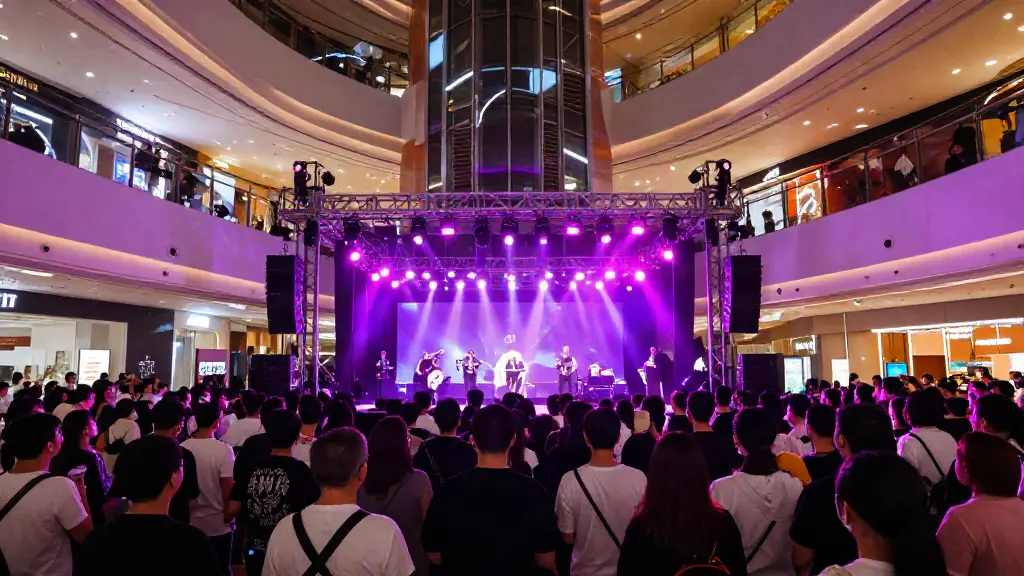
How to organise a retail event that brings creativity, technology and entertainment together: formats, staging, content and performance measurement.
Organising a retail event is not simply a matter of staging. It is a matter of direction. Anyone who manages a shopping centre, brand or retail space knows this well: a successful event is not the one with the most lights, but the one in which every element—concept, space, content and technology—tells the same story and draws an audience into the venue. In this guide, we look at how to structure a retail event from the initial idea to the stage, and how to measure its real value.
Why a retail event needs a single direction
An event in a shopping centre or retail space does not exist in isolation. It must speak to the property owner, attract visitors, generate content and leave a lasting impression after the final applause. When the concept, organisation and technology are managed by different parties, the result fragments: the idea loses force in production, the staging does not connect with the content, and communications arrive after the event has already ended.
A single direction is needed: one control point that brings strategy, creativity and technology together, from the concept to the stage and the spaces that host it. It is the difference between a forgettable event and a place that becomes more recognisable, more attractive and more vibrant.
From concept to stage: how to structure the event
- 01
Define the objective before choosing the format
Before selecting a format, decide what the event needs to achieve: increase footfall during a quiet period, launch a new brand, strengthen a venue’s identity, or create content that can be reused on digital channels? The objective guides every subsequent choice, including duration, timing, target audience and type of experience.
- 02
Choose a format that fits the space
A retail space is not a theatre: it has constraints relating to floor area, visitor flows, safety and opening hours. The format must be designed for the venue, not forced into it. Shows, installations, live performances, interactive experiences and hybrid formats work when they are built around the area’s real characteristics and visitors’ natural routes.
- 03
Design the staging as part of the story
Staging is not decorative scenery: it is the first message the audience receives. Lighting, sound, layout and materials must be consistent with the identity of both the brand and the venue. A carefully designed audiovisual system, lighting direction that supports key moments and a layout that guides people without obstructing visitor flows all help bring the space to life rather than simply filling it.
- 04
Build content around the experience
A retail event creates value when it produces content: video, photography, shareable moments and social campaigns. Decide from the outset what story you want to tell and how you will tell it. Content captured during the event can support weeks of communications, extending its reach far beyond the hours it is on stage.
- 05
Coordinate organisation and operations
Every successful event is powered by a precise operational system: permits, suppliers, installation, rehearsals, audience management, safety and dismantling. Organisation is what allows creativity to flourish without surprises. A single direction coordinates every part and maintains one clear point of accountability for timing, budget and quality.
Measuring results: how to turn an event into value
An event without measurement is an expense, not an investment. Define the indicators that matter in advance: footfall and attendance during the event, average dwell time in the space, traffic in participating stores, social coverage and content reach, press mentions and contacts collected. Compare these figures with a reference period to isolate the event’s impact.
The real outcome, however, extends beyond the figures for a single day. A well-designed event leaves a legacy: a more recognisable place, an audience that returns, content that continues to circulate and a stronger relationship between brands and visitors. This is what transforms an event into lasting value for a retail space.
Why work with a single partner
Managing creativity, organisation and technology through separate contacts multiplies the risks: schedules slip, accountability is lost and an idea becomes diluted between suppliers. A single partner covering media, communications and events, show production, the management and promotion of retail venues, content and advertising brings strategy, creativity and technology together under one direction.
With more than 25 projects spanning shopping centres, theatre and television productions, experiential spaces and international initiatives, Red Group supports property owners, management teams and brands in managing and marketing retail spaces, developing their positioning, event calendars, entertainment and communications to make each venue more recognisable, attractive and vibrant.
Conclusion
Organising a retail event means bringing multiple disciplines together in a single narrative: a clear objective, a format designed for the space, consistent staging, content created to last and rigorous measurement of the results. When creativity, organisation and technology work under a single direction, an event is more than a day of entertainment: it becomes a practical tool for growing your retail space.
If you are planning the next event for your retail space, we can take it from concept to stage under a single direction.